



Kate Kimmel
City staff reported that the city’s paid parking program generated $735,795 in gross revenue during its first 90 days of enforcement.
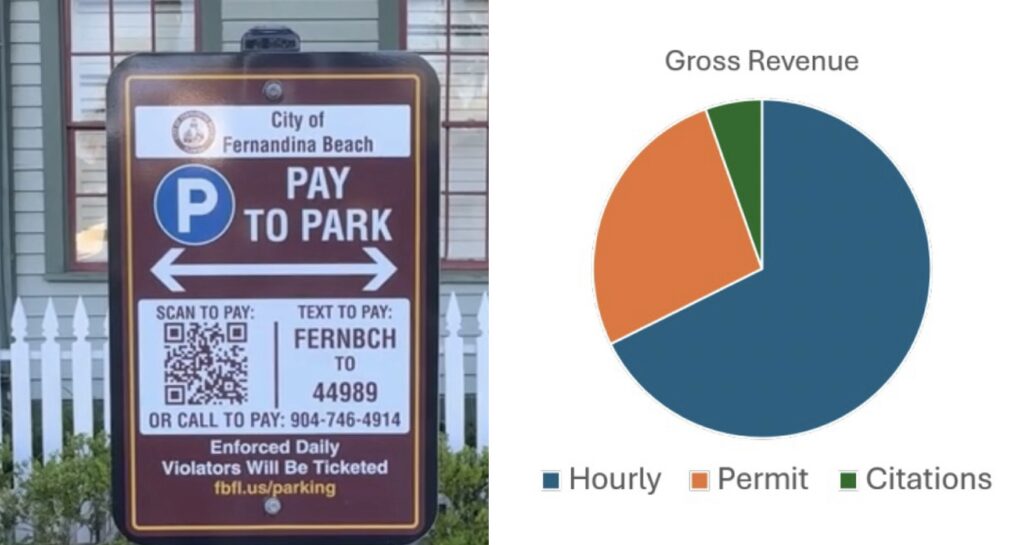
Hourly parking fees accounted for the largest share of revenue at $497,882, followed by $198,028 from permits and $39,884 from parking citations. According to the report, 89% of paid parking revenue came from nonresidents.
About 38% of the reported revenue, however, does not go to the city. OneParking, the third-party company contracted to manage the program, charges a monthly management fee of $26,964.
During the program’s first 90 days, those fees totaled about 11% of paid parking revenue. Another 28% of revenue went toward transaction and convenience fees and sales tax.
After those expenses are deducted, the program has generated about $448,880 in net revenue.
The city’s current forecast projects $1.9 million in gross annual revenue, with $530,000 allocated for variable expenses and $323,760 for management fees, resulting in a projected net revenue of about $1.04 million.
Two revenue projection models presented by City Manager Sarah Campbell during an Oct. 7 workshop estimated the paid parking program would generate between $1.8 million and $2 million in net revenue during its first year.
Deputy City Manager Jeremiah Glisson attributed the lower-than-projected revenue to the city’s decision to reduce the recommended hourly parking rate and offer free resident parking permits.
When city staff compiled the report, drivers had completed 96,099 hourly parking transactions.
Glisson said that number had likely surpassed 100,000 by the time he presented the report. The program averages 853 transactions per day, and the most common parking duration is two hours.
The city has issued 7,611 free parking permits to residents. Each household within city limits is eligible for two free permits, and city residents have purchased 310 permits for third and fourth vehicles. The city also has issued 1,553 permits to nonresidents.
The city has received payment for 719 parking citations, each carrying a $50 fine. Glisson said 219 citations have been dismissed or classified as warnings, and no citations have been appealed.
Net revenue generated by the paid parking program is deposited into the Parking Special Revenue Fund, which is dedicated entirely to city maintenance projects. Glisson cited the demolition of Brett’s, scheduled to begin July 1, as an example of an eligible project.
The future of the paid parking program depends on the outcome of an Aug. 18 citizen ballot initiative that asks Fernandina Beach voters whether they support continuing the program. However, the City Commission could overturn the result with a supermajority vote.
kkimmel@nassaunewsline.net