



By: Kate Kimmel
Nassau County Commissioners voted Monday to advance a proposed moratorium on new data center development, which would give county staff up to a year to study the potential environmental, infrastructure, and land-use impacts of such facilities before adopting regulations.
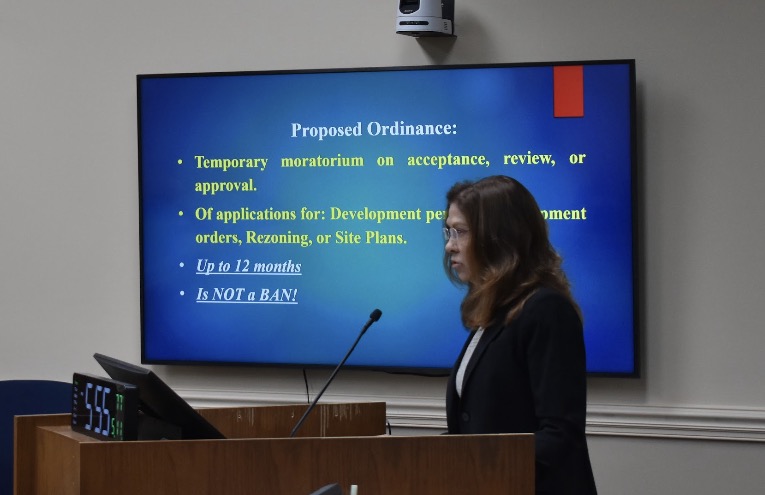
Commissioners approved the ordinance on first reading. A second reading and public hearing are scheduled for June 8.
If approved, the moratorium would temporarily halt the acceptance, review, and approval of applications for facilities defined as data centers for up to 12 months.
During that period, county officials plan to research the impacts data centers could have on Nassau County and draft development standards tailored to the industry.
“The moratorium period is all about fact finding and getting information,” Commissioner A.M. Huppmann said during the meeting.
The ordinance cites several examples of data center activity, including cryptocurrency mining, artificial intelligence computing, weather modeling, and cloud storage.
County officials said the measure is intended to address gaps in existing development regulations.
“Nassau County currently lacks specific zoning provisions or development regulations addressing the unique operational characteristics, infrastructure requirements, and environmental considerations associated with data center facilities,” the ordinance states.
The proposal also highlights concerns over water consumption. The ordinance notes that Nassau County, as a coastal community, depends heavily on groundwater resources and that long-term environmental and economic stability relies on careful groundwater management.
According to industry assessments, between 80% and 90% of water used by data centers comes from “blue” water sources, including lakes, rivers, and aquifers commonly used for drinking water. A medium-sized data center can consume roughly 100 million gallons of water annually — an amount comparable to the yearly use of about 1,000 U.S. households, according to the Florida Water and Pollution Control Operators Association.
The moratorium was prompted in part by speculation surrounding a possible data center project near Jacksonville International Airport. In a September press release, Miami-based NextNRG said a property near the airport was viable for such a development.
County officials said they were never formally notified of a proposal and had received no applications or communications related to a data center project. Internal county documents also confirmed officials had not been made aware of any pending proposal.
The issue has also surfaced in neighboring southeast Georgia. Officials in Camden County recently approved a six-month moratorium on data center development after a Florida businessman announced plans to seek rezoning for an industrial park in Kingsland that could accommodate data centers.
Under Nassau County’s proposed ordinance, officials would study six primary areas during the moratorium period: groundwater withdrawal impacts, effects on municipal and regional water systems, electrical grid capacity, land-use compatibility, impacts on wetlands and ecosystems, and best practices adopted by other Florida communities.
County officials also plan to hold public hearings and workshops to gather community input on possible amendments to the county’s comprehensive plan and land development regulations.
The ordinance’s first reading comes days after Gov. Ron DeSantis signed Senate Bill 484 into law. The legislation is intended to preserve local governments’ authority over comprehensive planning and land development regulations involving “large load customers,” such as data centers and other facilities with significant infrastructure demands.
The law also establishes a separate consumptive-use permitting process for large-scale data centers and requires public hearings before those permits can be issued.
County Attorney Denise May said the legislation still limits how far local governments can go in restricting such projects.
“It is apparent to me, looking at the legislative intent, what they have not given you the ability to do is to ban these uses,” May said.
Several Nassau County residents spoke during public comment, largely voicing support for the moratorium while urging commissioners to strengthen long-term protections.
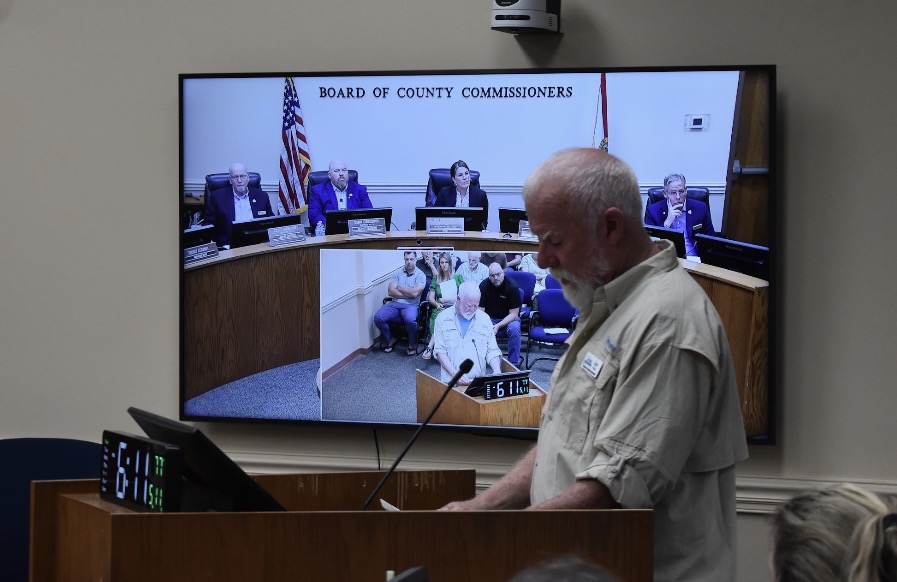
Resident Patricia Sahm questioned whether Senate Bill 484 would remain intact in future legislative sessions, citing concerns that state lawmakers could later limit local control over land-use decisions.
Joe Wass, a science outreach specialist with the St. Marys Riverkeeper, read a statement from Executive Director Emily Floore describing the moratorium as “responsible planning, not anti-growth,” and urging commissioners to consider who would benefit economically from a data center project and who would bear the costs.
Callahan resident Rachael DeVaux echoed those concerns, arguing that data centers often “socialize costs while privatizing profits.” She also shared accounts from residents in other parts of the country who said their communities experienced negative impacts after data centers were built nearby.
Another Callahan resident, Rachel Stillwell, said she purchased her property based on its agricultural zoning and future land-use designation, expecting the surrounding area to remain rural long term. She warned that rezoning agricultural land for data centers in other communities has led to expanded infrastructure and additional development pressure.
Stillwell urged commissioners to use the moratorium period to strengthen land-use protections and close loopholes that could allow incompatible development in rural areas.
May said county management has already begun assembling a group of stakeholders, conservation specialists, and other experts to assist with research during the moratorium period.
The second reading and expected final vote on the ordinance will take place June 8 during the commission’s regularly scheduled meeting.
kkimmel@nassaunewsline.net