



By Kate Kimmel
As drought conditions worsen across Northeast Florida, Nassau County officials say the countywide burn ban was intended to reduce the risk of fast-moving wildfires during one of the driest periods the region has experienced in years.
Burning yard debris is common in the rural parts of Nassau County, where many properties are larger and residents often dispose of limbs, brush and storm debris through controlled outdoor burns. During drought conditions, however, those fires can become dangerous quickly.
The burn ban came as the St. Johns River Water Management District declared a Phase III Extreme Water Shortage across parts of Northeast Florida, citing ongoing drought, declining groundwater levels and reduced river flows.
According to the district, the region is experiencing “exceptional drought conditions,” with officials warning that even substantial rainfall over the next several months may not immediately eliminate drought impacts. The district said it evaluated rainfall totals, aquifer levels, river flows and drought indicators before issuing the declaration.
Drought conditions have left vegetation unusually dry, creating ideal conditions for fires to ignite and spread quickly. The Southeast has become one of the nation’s most active wildfire regions this spring, with Florida and Georgia experiencing widespread fire danger tied to prolonged dry
Fire Chief Brady Rigden told commissioners May 11 that recent rainfall averaged about two-thirds of an inch countywide.
“We are about, give or take, 20 inches below average on our rainfall,” Rigden said. “As soon as the sun comes out, it’s going to dry that little bit of rain up, and unless we get some sustained, long-term rain, my recommendation would be that we continue the burn ban.”
According to Drought.gov, Nassau County is currently 7.35 inches below what is considered normal rainfall levels, making 2026 the county’s third-driest year to date and marking the 16th-driest April in 132 years of recordkeeping.
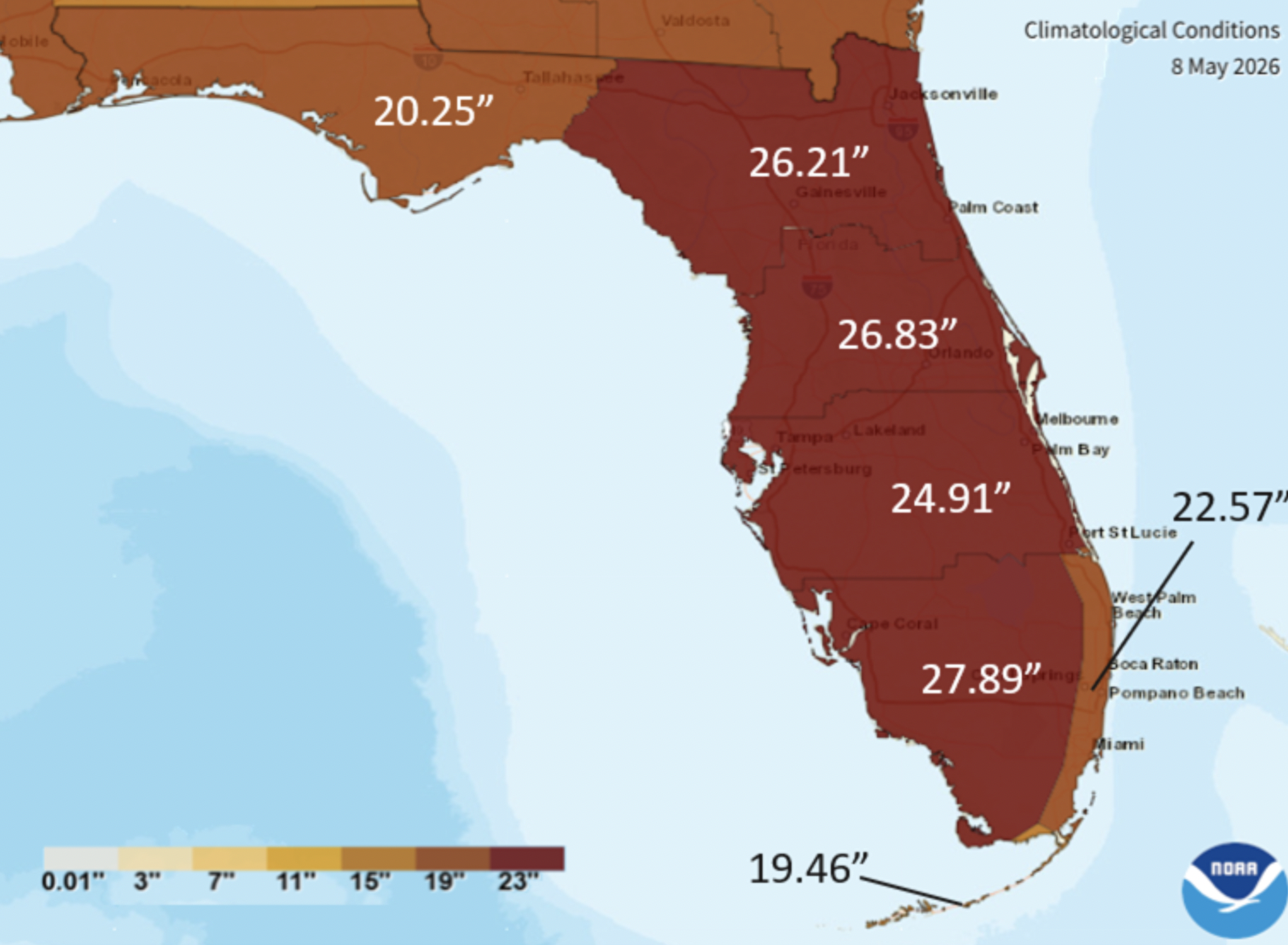
A drought outlook map published May 8 by National Oceanic and Atmospheric Administration showed the region would need about 26.21 inches of rainfall over the next three months to improve extreme drought conditions.
Under normal conditions, some outdoor burning is allowed in Nassau County under state guidelines. The county’s burning requirements page states that yard waste burning is generally permitted if residents follow setback requirements and safety rules, while larger burns require authorization from the Florida Forest Service.
However, Nassau County’s open burning regulations also note that outdoor burning is prohibited when the Florida Forest Service determines weather conditions are unsafe for burning.
On Monday, Nassau County posted on social media that the countywide burn ban had expired because the County Commission did not vote to renew it. County burn bans must be renewed every seven days to remain in effect.
Despite the expiration of the countywide order, officials still urged residents to use “extreme caution” with any outdoor burning because of the ongoing drought and wildfire risk.
The county also reminded residents that burn ban restrictions still apply to yard waste piles wider than 8 feet, which continue to require authorization through the Florida Forest Service.
Officials throughout Northeast Florida have increasingly tightened restrictions as drought conditions worsened. Neighboring counties have also issued burn bans or expanded fire safety measures in recent weeks because of elevated wildfire risk.
Water shortages and wildfire risks are closely connected. Dry soils, low humidity and reduced groundwater levels make forests and brush more combustible. Experts also warn that North Florida’s sandy soil dries out quickly, meaning even brief rainfall may not significantly reduce fire danger.
The St. Johns River Water Management District has also implemented mandatory watering restrictions across affected counties, including Nassau County, limiting landscape irrigation in an effort to conserve water supplies during the drought.
While grills used for cooking are generally still permitted under most burn bans, officials are urging residents to avoid unnecessary outdoor flames, sparks or activities that could ignite dry vegetation.
Rigden said that meaningful relief will likely depend on several weeks of sustained rainfall during Florida’s summer rainy season. Until then, officials are asking residents to conserve water and take extra precautions outdoors.
kkimmel@nassaunewsline.net