



By: Kate Kimmel
Fernandina Beach Commissioners approved the purchase of two downtown parcels across from City Hall on Tuesday in what they described as a time-sensitive opportunity to secure land for future public use.
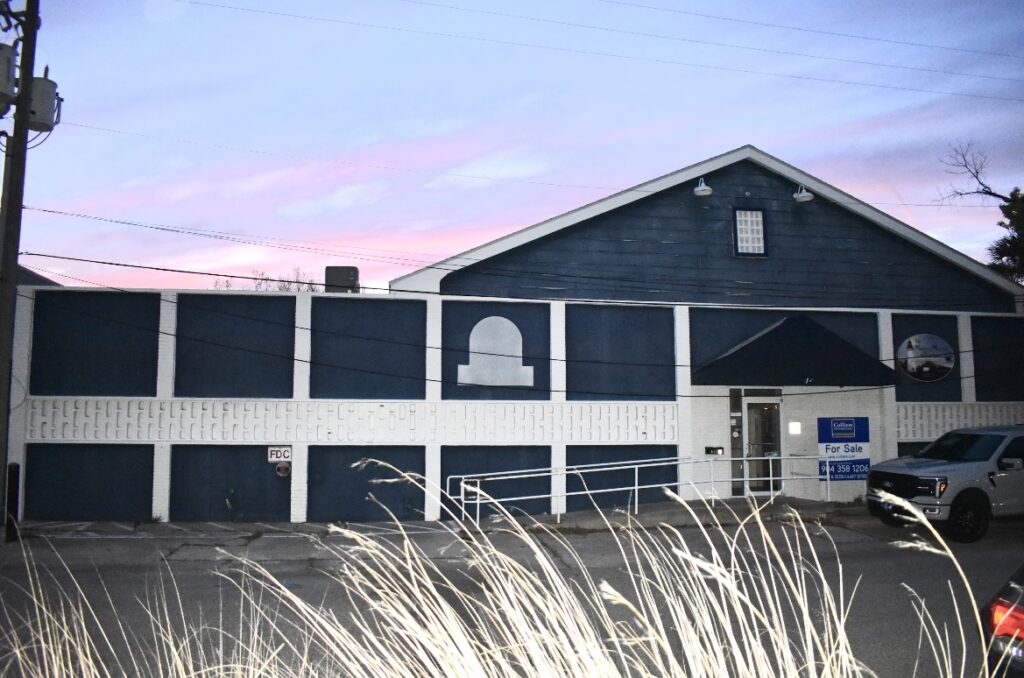
In a 4-1 vote, the City Commission agreed to buy the 0.45-acre property for $2.1 million, with closing and demolition costs expected to bring the total to $2.225 million. The seller, OnPoint Visuals Inc., had originally listed the property for $2.2 million before the city negotiated a lower price following a survey and appraisal.
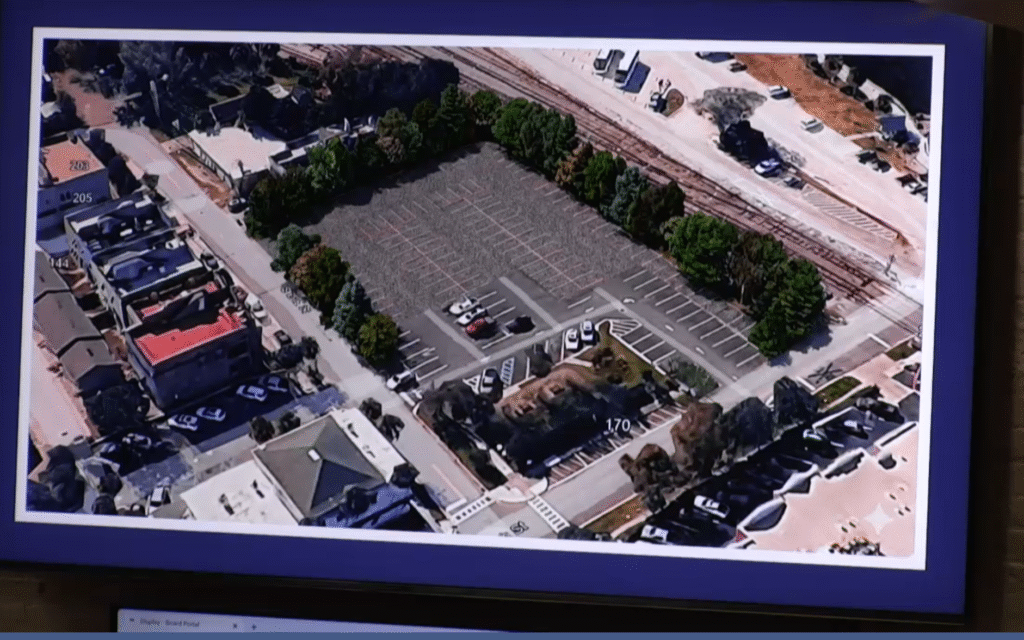
The site consists of two parcels, including an 18,088-square-foot warehouse built in 1925 and a smaller vacant lot. Commissioners said the warehouse would likely be demolished at an estimated cost of $85,000 if approved by the Historic District Council. Following demolition, the land is expected to be converted into a gravel parking lot to address downtown parking needs.
While some commissioners pointed to the site as a potential future location for a new City Hall, they emphasized that no immediate plans are in place to construct a new building. Commissioner Joyce Tuten said the purchase is about long-term planning rather than a current project.
“Building a new city hall is not part of our vision, but most people realize how old and dysfunctional this building is, and a future commission ten or twenty years from now needs a new building or a serious renovation of the building,” Tuten said.
City Manager Sarah Campbell addressed public criticism that the purchase diverts funding from other needs, such as seawall repairs or recreational projects. She said the majority of the funding, about $1.8 million, will come from general government impact fees, which are paid by developers and are restricted to growth-related government uses.
“Those funds can not be spent on routine maintenance, downtown revitalization, or the Ybor Alvarez fields, they are specifically for general government growth,” Campbell said.
The remaining roughly $300,000 will come from the city’s general fund contingency account, which is typically used to cover funding gaps.
Commissioners also pushed back on suggestions that the city should sell existing properties to cover costs. Campbell said most city-owned parcels are not revenue-generating assets but instead consist of infrastructure and public-use land such as parks, greenways and utility sites.
“People keep saying we should just sell all our parcels to pay for this and pay for that, but when you look at what these parcels are, they’re lift stations, parks, greenways.” Commissioner Tim Poynter said. “These aren’t a bunch of retail properties that we’re sitting on.”
Poynter continued, arguing that acquiring strategically located property is critical because opportunities to do so are limited.
“When you have the opportunity to get a property like this for the city to hold and control, we control,” Poynter said. “When that property goes away, it’s gone forever.”
Commissioner Joyce Tuten said that concerns had been raised about removing the property from the tax roll. According to Campbell, the site currently generates about $17,000 annually in property taxes, with approximately $4,200 going to the city.
Tuten said the loss represents a very small fraction of the city’s overall tax revenue and is unlikely to have a meaningful financial impact.
Vice Mayor Darron Ayscue cast the lone dissenting vote. While he agreed that the funding source was appropriate, he said he opposed the purchase on principle, arguing the property would be better suited for private commercial redevelopment that would remain on the tax roll.
“Philosophically speaking, I’ve been really big on commercial development,” Ayscue said.
Mayor James Antun countered that the property’s vacancy suggests redevelopment challenges, citing factors such as cost and location.
“With all due respect, I think it has sat there empty because no one else is interested in redeveloping it,” Antun said.
City officials described the decision as a “now or never” opportunity tied in part to the limited timeframe for using impact fee funds for eligible projects.
The city will close on the property within the next 30 days, Campbell said. Next steps in the process include completing due diligence and an environmental assessment, and placing an earnest money deposit.
The city will also seek approval for demolition of the warehouse from the Historic District Council, solicit bids for the work, and develop a site plan for interim use as parking, with potential rezoning to follow.
kkimmel@nassaunewsline.net