



By Kate Kimmel
City staff presented a revised plan for the Brett’s Waterway Cafe demolition and marina redesign project during the Jan. 20 regular city commission meeting that includes construction of a new timber walkway, demolition of the marina operations building and the addition of security gates to floating docks.
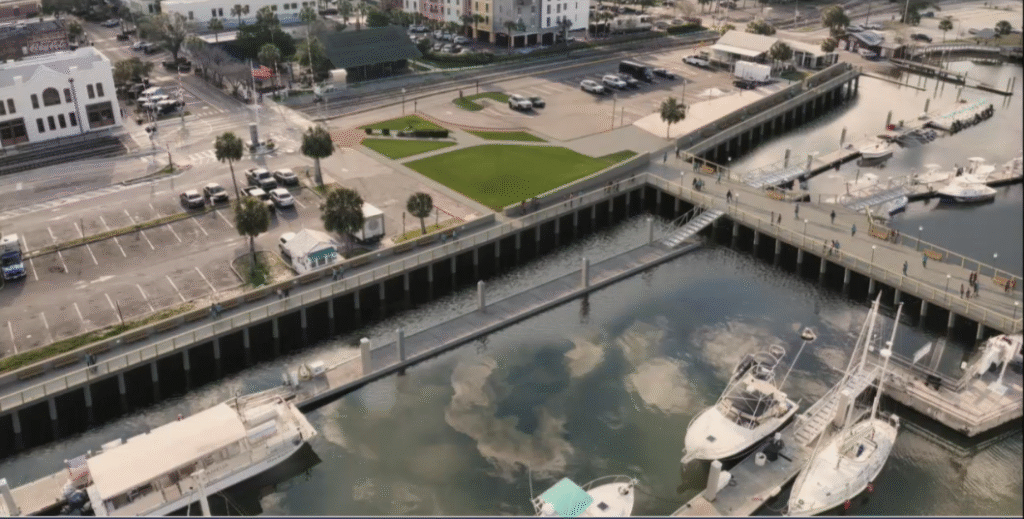
Andrew Halesko, CEO and senior planner with Passero Associates, said the changes and project modifications are expected to save time and money by shortening construction and reducing associated costs. The project is expected to begin this summer after the Shrimp Festival.
As part of the recommended changes, a new timber walkway would be constructed north of the existing one, which floods about 25 days a year due to its low elevation. Building a new walkway in a different location would be a better investment than rehabilitating the existing structure, Halesko said.
The approach would save the city about 30 days in construction time and between $50,000 and $100,000 by avoiding complications associated with rehabilitating the walkway while continuing marina operations. It would also allow the city to build the walkway using synthetic materials to extend its lifespan, though officials still plan to seek quotes for natural wood.
The western section and entryway of the new walkway would be built where the marina operations building currently sits. Halesko said the building and the concrete structure beneath it are past their useful life.
Commissioner Genece Minshew asked where the marina manager would operate if the building were demolished. Deputy City Manager Glenn Akrimoff said staff are considering a temporary trailer and, ultimately, repurposing the former Shrimp Museum building during Phase 2 of the project.
Another key recommendation is to leave the fuel tank in its current location to minimize disruption to marina operations. Doing so could save between 60 and 90 days and between $100,000 and $200,000, Halesko said. Keeping the tank in place would also allow the fuel line to be relocated underground, improving long-term stability.
Minshew said her understanding was that the fuel tank’s current position relative to the dock limits fuel pressure and asked whether the fuel pumps would be relocated.
Halesko said the primary cause of the pressure issue is the “elbows,” or 90-degree turns, in the piping between the tank and the pumps. That issue would be addressed during Phase 2, when the lines would be moved underground, he said.
Staff also emphasized increased security, particularly access to the floating docks. Plans include installing gates with access codes.
Vice Mayor Darron Ayscue asked whether the security gates would remain open during the day since the docks are public facilities. Akrimoff said that would be a policy decision for the commission, but staff envision an opening and closing schedule similar to the Atlantic Recreation Center.
Halesko said permitting with the U.S. Army Corps of Engineers is proceeding favorably. The city has already received initial comments on the plan, and the next step is technical review. A more detailed project review will take place closer to the bidding phase.